
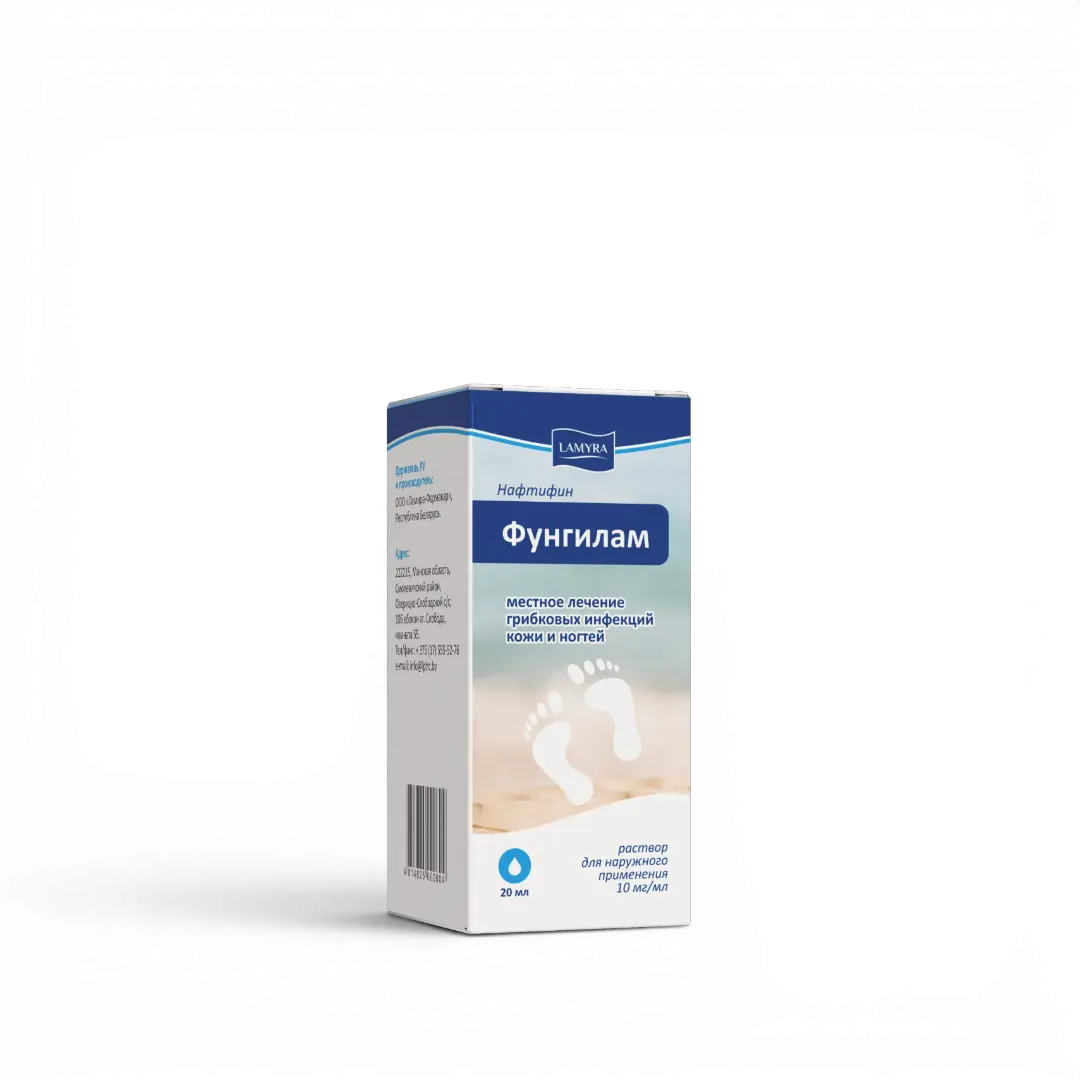


Fungilam contains the active substance naftifine and is intended for the topical treatment of fungous skin and nail diseases.
Naftifine is active against various fungal pathogens, including Trichophyton, Microsporon, Epidermophyton, Candida, Aspergillus, and Sporothrix schenkii. Fungicidal action of naftifine is associated with blocking the synthesis of ergosterol (a membrane component) by inhibiting squalene epoxidase enzyme.
Besides, naftifine exhibits antibacterial activity against microorganisms that are often associated with mycoses.
In clinical use, naftifine is reported to have an anti-inflammatory action resulting in rapid elimination of inflammation signs, particularly itching.
1 ml of solution contains 10 mg of naftifine.
List of excipients for Fungilam: ethanol (96%), propylene glycol, purified water.
Fungilam is intended for external use on skin and nails only.
For the treatment of fungous skin diseases, apply once daily. Cleanse and dry the affected skin and adjacent areas, then thoroughly moisten with the solution directly from the bottle or with a cotton swab. Continue the treatment for at least two weeks after clinical recovery to prevent recurrence.
For the treatment of fungous nail diseases, apply the solution twice daily to the free border of nail. Before the first application, remove as much of the affected nail as possible with scissors or a nail file.
Treatment duration in onychomycosis depends on the rate of nail regrowth and may range from 3 to 6 months, until a new nail fully grown.
As a preventative measure, it is preferable not to use Fungilam during pregnancy. Do not use Fungilam during breastfeeding period.
Safety and efficacy of naftifine in children and adolescence under 18 years of age have not been established.
Topical treatment of fungous diseases caused by naftifine-sensitive pathogens:
- fungous skin and skinfold diseases (tinea manuum, tinea pedis, tinea corporis, tinea inguinalis) with or without pruritus;
- fungous nail diseases (onychomycosis, tinea unguium);
- cutaneous candidiasis;
- versicolor tinea (pityriasis versicolor).
Prescription status:
Over-the-counter.
Allergy to naftifine or any excipients included in the product.
Fungilam contains the active substance naftifine and is intended for the topical treatment of fungous skin and nail diseases.
Naftifine is active against various fungal pathogens, including Trichophyton, Microsporon, Epidermophyton, Candida, Aspergillus, and Sporothrix schenkii. Fungicidal action of naftifine is associated with blocking the synthesis of ergosterol (a membrane component) by inhibiting squalene epoxidase enzyme.
Besides, naftifine exhibits antibacterial activity against microorganisms that are often associated with mycoses.
In clinical use, naftifine is reported to have an anti-inflammatory action resulting in rapid elimination of inflammation signs, particularly itching.
1 ml of solution contains 10 mg of naftifine.
List of excipients for Fungilam: ethanol (96%), propylene glycol, purified water.
Fungilam is intended for external use on skin and nails only.
For the treatment of fungous skin diseases, apply once daily. Cleanse and dry the affected skin and adjacent areas, then thoroughly moisten with the solution directly from the bottle or with a cotton swab. Continue the treatment for at least two weeks after clinical recovery to prevent recurrence.
For the treatment of fungous nail diseases, apply the solution twice daily to the free border of nail. Before the first application, remove as much of the affected nail as possible with scissors or a nail file.
Treatment duration in onychomycosis depends on the rate of nail regrowth and may range from 3 to 6 months, until a new nail fully grown.
As a preventative measure, it is preferable not to use Fungilam during pregnancy. Do not use Fungilam during breastfeeding period.
Safety and efficacy of naftifine in children and adolescence under 18 years of age have not been established.
Topical treatment of fungous diseases caused by naftifine-sensitive pathogens:
- fungous skin and skinfold diseases (tinea manuum, tinea pedis, tinea corporis, tinea inguinalis) with or without pruritus;
- fungous nail diseases (onychomycosis, tinea unguium);
- cutaneous candidiasis;
- versicolor tinea (pityriasis versicolor).
Prescription status:
Over-the-counter.
Allergy to naftifine or any excipients included in the product.