
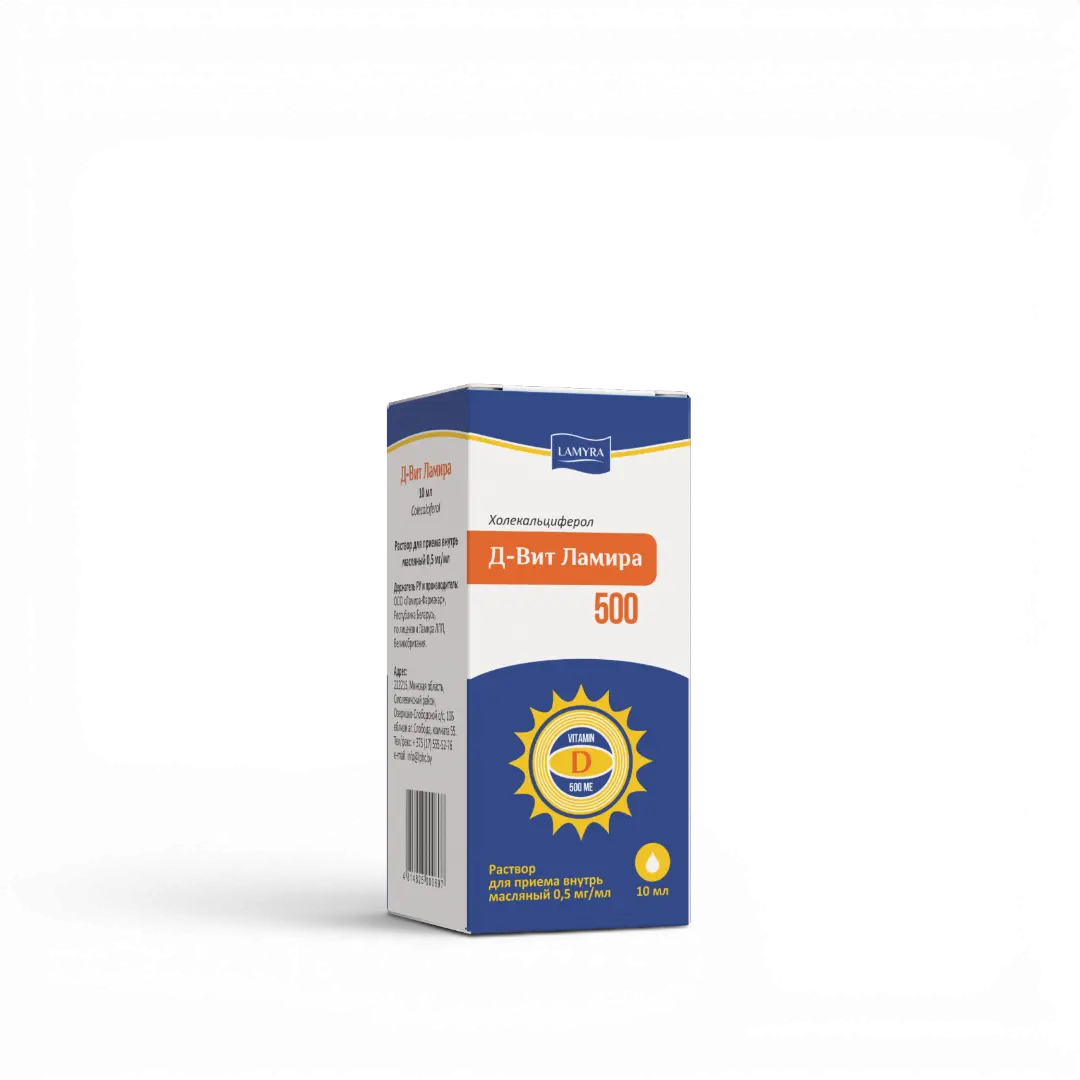
D-Vit Lamyra 500


D-Vit Lamyra is used for:
• prevention and treatment of vitamin D deficiency;
• treatment of rickets (disease which affects formation and development of bone tissue in children);
• as an adjunct to treatment for osteoporosis in patients at risk of vitamin D deficiency
Cholecalciferol (vitamin D3) along with parathyroid hormone and calcitonin significantly contributes to regulation of calcium and phosphorus metabolism. The biologically active form of vitamin D improves intestinal calcium absorption and regulates bone mineralization. With vitamin D deficiency, the skeletal calcification fails (resulting in rickets) or bone decalcification occurs (resulting in osteomalacia). Calcium and/or vitamin D deficiency causes reversible increase in parathyroid hormone secretion. That secondary hyperparathyroidism provokes increased bode metabolism which may be liable to cause brittleness of the bones and fractures.
1 drop of the solution contains 500 IU (12.5 mkg) of vitamin D3
1 ml (40 drops) of the drug product contains 20000 IU (0.5 mg) of cholecalciferol (vitamin D)
Excipients: medium-chain triglycerides
Always take the product exactly as your doctor or pharmacist has told you. Check with your doctor or pharmacist if you are not sure.
The dosage is determined by your doctor. The dose varies according to the disease for which your are prescribed to take D-Vit Lamyra. Hence, always take the dose that is prescribed personally to you, even if you know someone else to have been prescribed a much greater dose.
Unless your doctor instruct otherwise, the recommended dose is as follows:
Prevention of vitamin D deficiency
Usual daily dose:
• For newborns, infants and children aged 2 weeks to 3 years: 1 to 2 drops (500-1000 IU).
• For children aged 4 years and older and adolescents: 1 to 3 drops (500-1500 IU).
• For adults aged 19 to 70 years: 1 to 4 drops (500-2000 IU).
• For elderly patients aged over 70 years: 2 to 4 drops (2000-4000 IU).
Treatment of rickets
Total amount of vitamin D required varies according to the severity of your disease.
As initial therapy for rickets, products with higher concentrations of vitamin D are administered.
Subsequently, the usual dose is 2 to 12 drops of D-Vit Lamyra daily.
Treatment of vitamin D deficiency
Usual daily dose:
• For newborns, infants and children aged 2 weeks to 3 years: 5 drops daily for 6 weeks, then 1 to 2 drops.
• For children aged 4 years and older and adolescents: 5 drops daily for 6 weeks, then 1 to 3 drops.
• For adults aged 19 to 70 years and elderly patients aged over 70 years: 15 drops daily for 8 weeks, then 3 to 5 drops daily.
As an adjunct to treatment for osteoporosis in patients at risk of vitamin D deficiency
Usual daily dose:
• For adults aged 19 years and older: 2 to 4 drops daily or 14 to 26 drops weekly.
D-Vit Lamyra should be taken orally. The best option is to drop the solution right into the mouth or where necessary drop it into a spoon with a small amount of liquid.
- For prevention and treatment of vitamin D deficiency;
- For treatment of rickets (disease which affects formation and development of bone tissue in children);
- As an adjunct to specific therapy for osteoporosis in patients with the risk factors for vitamin D deficiency.
Prescription status:
Over-the-counter.
- Hypersensitivity to the active ingredient or any of the excipients included in the drug product
- Hypervitaminosis D
- Conditions which cause increase in blood and/or urine calcium levels (e.g. impaired renal excretion of calcium and phosphates, patient immobilization, use of thiazide diuretics)
- Calcium kidney stones
- Severe arteriosclerosis
- Severe renal insufficiency
D-Vit Lamyra is used for:
• prevention and treatment of vitamin D deficiency;
• treatment of rickets (disease which affects formation and development of bone tissue in children);
• as an adjunct to treatment for osteoporosis in patients at risk of vitamin D deficiency
Cholecalciferol (vitamin D3) along with parathyroid hormone and calcitonin significantly contributes to regulation of calcium and phosphorus metabolism. The biologically active form of vitamin D improves intestinal calcium absorption and regulates bone mineralization. With vitamin D deficiency, the skeletal calcification fails (resulting in rickets) or bone decalcification occurs (resulting in osteomalacia). Calcium and/or vitamin D deficiency causes reversible increase in parathyroid hormone secretion. That secondary hyperparathyroidism provokes increased bode metabolism which may be liable to cause brittleness of the bones and fractures.
1 drop of the solution contains 500 IU (12.5 mkg) of vitamin D3
1 ml (40 drops) of the drug product contains 20000 IU (0.5 mg) of cholecalciferol (vitamin D)
Excipients: medium-chain triglycerides
Always take the product exactly as your doctor or pharmacist has told you. Check with your doctor or pharmacist if you are not sure.
The dosage is determined by your doctor. The dose varies according to the disease for which your are prescribed to take D-Vit Lamyra. Hence, always take the dose that is prescribed personally to you, even if you know someone else to have been prescribed a much greater dose.
Unless your doctor instruct otherwise, the recommended dose is as follows:
Prevention of vitamin D deficiency
Usual daily dose:
• For newborns, infants and children aged 2 weeks to 3 years: 1 to 2 drops (500-1000 IU).
• For children aged 4 years and older and adolescents: 1 to 3 drops (500-1500 IU).
• For adults aged 19 to 70 years: 1 to 4 drops (500-2000 IU).
• For elderly patients aged over 70 years: 2 to 4 drops (2000-4000 IU).
Treatment of rickets
Total amount of vitamin D required varies according to the severity of your disease.
As initial therapy for rickets, products with higher concentrations of vitamin D are administered.
Subsequently, the usual dose is 2 to 12 drops of D-Vit Lamyra daily.
Treatment of vitamin D deficiency
Usual daily dose:
• For newborns, infants and children aged 2 weeks to 3 years: 5 drops daily for 6 weeks, then 1 to 2 drops.
• For children aged 4 years and older and adolescents: 5 drops daily for 6 weeks, then 1 to 3 drops.
• For adults aged 19 to 70 years and elderly patients aged over 70 years: 15 drops daily for 8 weeks, then 3 to 5 drops daily.
As an adjunct to treatment for osteoporosis in patients at risk of vitamin D deficiency
Usual daily dose:
• For adults aged 19 years and older: 2 to 4 drops daily or 14 to 26 drops weekly.
D-Vit Lamyra should be taken orally. The best option is to drop the solution right into the mouth or where necessary drop it into a spoon with a small amount of liquid.
- For prevention and treatment of vitamin D deficiency;
- For treatment of rickets (disease which affects formation and development of bone tissue in children);
- As an adjunct to specific therapy for osteoporosis in patients with the risk factors for vitamin D deficiency.
Prescription status:
Over-the-counter.
- Hypersensitivity to the active ingredient or any of the excipients included in the drug product
- Hypervitaminosis D
- Conditions which cause increase in blood and/or urine calcium levels (e.g. impaired renal excretion of calcium and phosphates, patient immobilization, use of thiazide diuretics)
- Calcium kidney stones
- Severe arteriosclerosis
- Severe renal insufficiency