
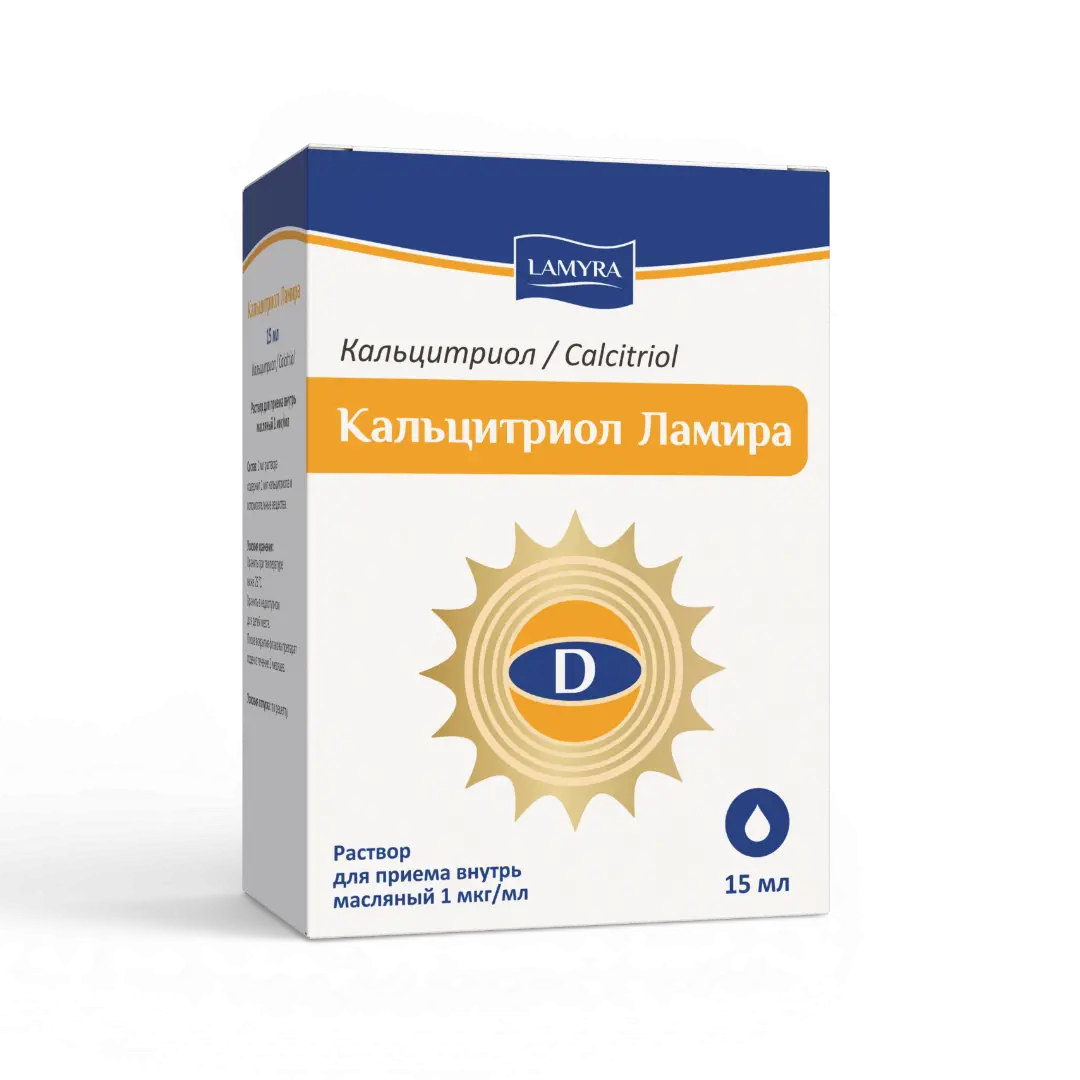
Calcitriol Lamyra


Calcitriol is an active form of vitamin D produced within the kidneys from its precursor 25-hydroxycholecalciferol The human body normally produces 0.5 to 1.0 mkg of calcitriol per day. Calcitriol acts to increase plasma calcium levels through its direct effects on bones, renal tubuli, and the small intestine. Calcitriol increases bone matrix calcification and bone mass and stimulates osteoblast proliferation and protein synthesis. In the renal tubuli, calcitriol promotes calcium and phosphate reabsorption. It can inhibit 1-α-hydroxylase, thereby reducing its own production through a negative feedback mechanism. In the intestine, calcitriol induces synthesis of calcium binding protein responsible for calcium transport across the mucosal membrane, activates calcium absorption, and facilitates phosphorus absorption. In the parathyroid glands, calcitriol inhibits synthesis and secretion of parathyroid hormone.
In patients with uremia, kidneys fail to synthesize sufficient amounts of calcitriol from its precursor resulting in hypocalcaemia and secondary hyperparathyroidism, which are primarily responsible for metabolic bone disease in renal insufficiency. Oral calcitriol improves intestinal calcium absorption in patients with renal osteodystrophy, normalizes serum concentrations of parathyroid hormone, and improves bone health.
Calcitriol reduces hypocalcemia and its clinical manifestations in patients with hypoparathyroidism.
Calcitriol may be considered as replacement therapy in patients with vitamin D-resistant rickets as they lack sufficient endogenous synthesis of calcitriol within the kidneys.
1 ml of solution contains 1 mkg of calcitriol
Calicitriol Lamyra is intended for oral use only.
To accurately measure the required amount of the solution and the dose of the product accordingly, attach the oral individual oral dosing device (IOD) to the opening in the bottle cap and flip the assembly upright (see the figure). Pull the plunger down to draw the required amount of the product according to the IOD graduation. Turn the bottle upside down and remove the IOD with the solution from the bottle.

Measure the dose immediately before use.
For patients requiring higher doses, the daily dose should be divided into 2-3 intakes.
Take with meals.
Renal osteodystrophy in patients with chronic renal insufficiency undergoing hemodialysis (e.g. with artificial kidney). Hypoparathyroidism (hypoparathyroid gland disease):
- postoperative hypoparathyroidism;
- idiopathic hypoparathyroidism;
- pseudohypoparathyroidism.
Hypophosphataemic rickets (known as vitamin D-resistant rickets, a severe form of “English” disease that does not respond to vitamin D therapy).
Prescription Status:
Prescription only medicine
All conditions associated with hypercalcemia (e.g. hyperparathyroid disorder – hyperparathyroidism).
Hypersensitivity to the active substance (other substances of the same class (vitamin D or its metabolites) or to one of the components).
Suspected hypervitaminosis D.
Calcitriol is an active form of vitamin D produced within the kidneys from its precursor 25-hydroxycholecalciferol The human body normally produces 0.5 to 1.0 mkg of calcitriol per day. Calcitriol acts to increase plasma calcium levels through its direct effects on bones, renal tubuli, and the small intestine. Calcitriol increases bone matrix calcification and bone mass and stimulates osteoblast proliferation and protein synthesis. In the renal tubuli, calcitriol promotes calcium and phosphate reabsorption. It can inhibit 1-α-hydroxylase, thereby reducing its own production through a negative feedback mechanism. In the intestine, calcitriol induces synthesis of calcium binding protein responsible for calcium transport across the mucosal membrane, activates calcium absorption, and facilitates phosphorus absorption. In the parathyroid glands, calcitriol inhibits synthesis and secretion of parathyroid hormone.
In patients with uremia, kidneys fail to synthesize sufficient amounts of calcitriol from its precursor resulting in hypocalcaemia and secondary hyperparathyroidism, which are primarily responsible for metabolic bone disease in renal insufficiency. Oral calcitriol improves intestinal calcium absorption in patients with renal osteodystrophy, normalizes serum concentrations of parathyroid hormone, and improves bone health.
Calcitriol reduces hypocalcemia and its clinical manifestations in patients with hypoparathyroidism.
Calcitriol may be considered as replacement therapy in patients with vitamin D-resistant rickets as they lack sufficient endogenous synthesis of calcitriol within the kidneys.
1 ml of solution contains 1 mkg of calcitriol
Calicitriol Lamyra is intended for oral use only.
To accurately measure the required amount of the solution and the dose of the product accordingly, attach the oral individual oral dosing device (IOD) to the opening in the bottle cap and flip the assembly upright (see the figure). Pull the plunger down to draw the required amount of the product according to the IOD graduation. Turn the bottle upside down and remove the IOD with the solution from the bottle.
Measure the dose immediately before use.
For patients requiring higher doses, the daily dose should be divided into 2-3 intakes.
Take with meals.
Renal osteodystrophy in patients with chronic renal insufficiency undergoing hemodialysis (e.g. with artificial kidney). Hypoparathyroidism (hypoparathyroid gland disease):
- postoperative hypoparathyroidism;
- idiopathic hypoparathyroidism;
- pseudohypoparathyroidism.
Hypophosphataemic rickets (known as vitamin D-resistant rickets, a severe form of “English” disease that does not respond to vitamin D therapy).
Prescription Status:
Prescription only medicine
All conditions associated with hypercalcemia (e.g. hyperparathyroid disorder – hyperparathyroidism).
Hypersensitivity to the active substance (other substances of the same class (vitamin D or its metabolites) or to one of the components).
Suspected hypervitaminosis D.